

What is SME?
‘Soma’ means body. Body Movement.
Somatic Movement Education is a neuromuscular (nerve-muscle) brain retraining process that uses specific slow, voluntary body movements called pandiculations to reverse Sensory Motor Amnesia. Which is essentially the brain forgetting how to fully relax and move freely due to stress tension patterns that have become ingrained through poor posture, habitual repetitive movements and trauma.
This disconnection and dissociation between brain and body will be present whenever there is a long-standing tension in the body. When muscles have learnt to stay contracted in response to stress, accidents, injuries, surgery or everyday habits. These learnt patterns can be retrained or unlearned.
What are Somatic reflexes?
The somatic reflexes are involuntary, full body muscular responses to stress, threat and demand. They are wired into the nervous system to protect you in the short term. The problem is not the reflex itself. The problem is that the brain can get stuck running the pattern long after the original event has passed.
Majority of people fall into one of three stress patterns:
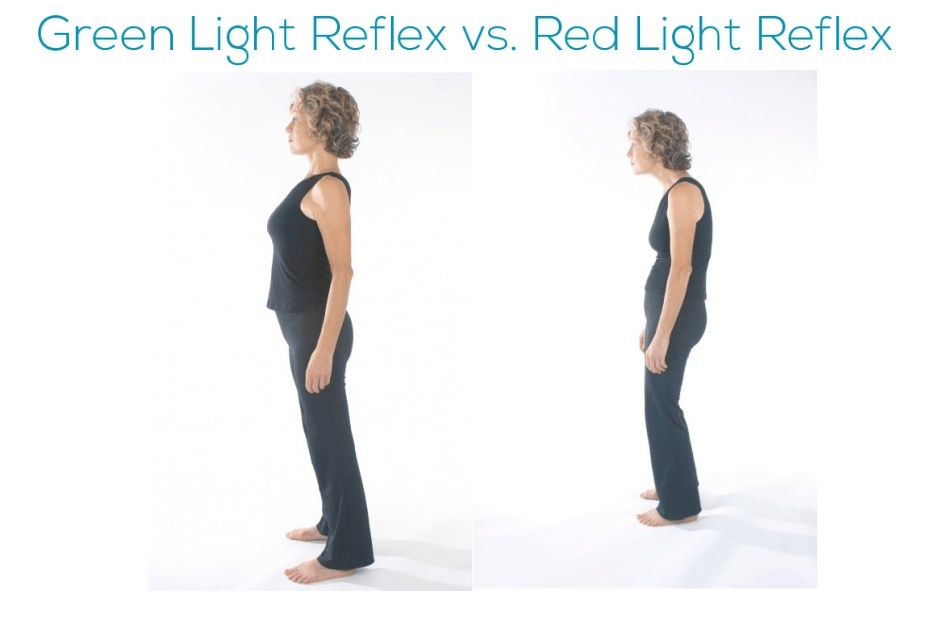
Red Light Reflex Stress pattern – The withdrawal response to fear and anxiety
When the nervous system perceives threat, the body instinctively curls inward to protect the soft front. The chest hollows, the shoulders pull forward, the abdomen tightens, the breath shortens and the jaw clenches. Held over time this becomes hunched posture, neck and shoulder pain, restricted breathing and a chronically anxious nervous system.
Primary muscles involved: Abdominals, chest, front of the neck, jaw, hip flexors
Green Light Reflex Stress Pattern The action response to demands and responsibilities
The Green Light Reflex pushes you forward into action. The lower back arches, the glutes grip, the hamstrings tighten and the body leans into go mode. In our deadline driven culture this reflex stays on for years at a time, producing lower back pain, sciatic discomfort, tight hips and a feeling of never being able to fully rest.
Primary muscles involved: Lower back, glutes, hamstrings, calves, back of the neck
The Trauma Reflex: The protective response to injury and one sided activity
After an injury, surgery, fall or any repeated one sided activity, the body shifts and rotates to protect the affected area. The Trauma Reflex is asymmetric: one hip hikes, one shoulder drops, the torso twists. It explains why an old injury keeps producing pain long after the tissue has healed and why one side of the body always feels different to the other.
Muscles primarily involved: Quadratus lumborum, obliques, latissimus, one sided patterns through the torso
Text Neck and Forward Head Posture – A Red Light Reflex Pattern
One example of this is the increased use of tech in our lives. Adults and children are spending so much time, slouched, head forward, looking down, scrolling on devices. Sitting slouched repeatedly, our nervous system learns to adapt by maintaining that slouched posture, keeping specific muscles contracted. Over time, our balance (vestibular) and position sense (proprioception) systems adjust, allowing us to feel increasingly comfortable in this unnatural position. Slouching forward, head forward, begins to feel normal, even good, and sitting up straight requires effort and feels uncomfortable. We remain unaware of this unnatural adaption until it ultimately leads to pain, injury or illness.
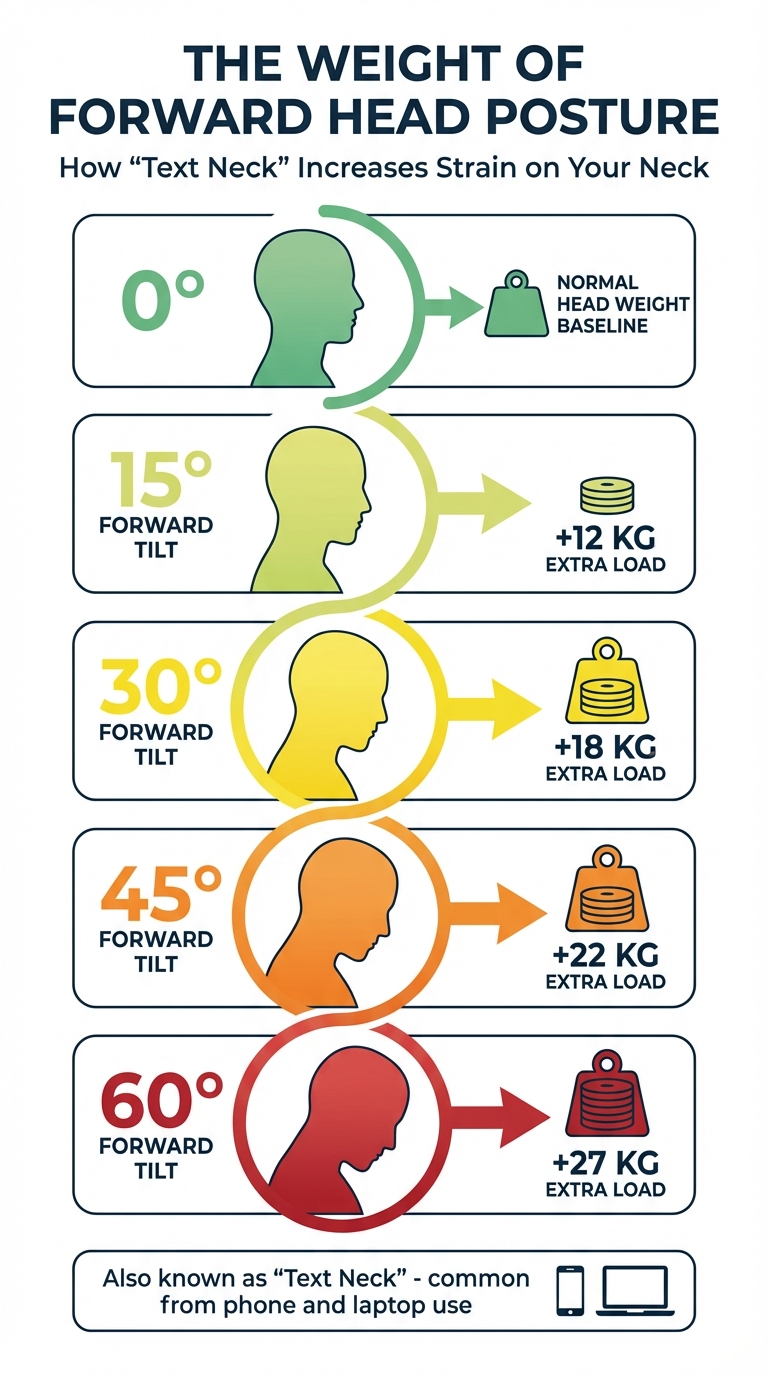
Forward head posture is becoming an epidemic due to constant use of smartphones and computers. When we look downward over and over, the muscles in the front of our neck, our chest, and our abdomen become chronically contracted—and they keep us stuck in forward head posture all the time.
The reason that health professionals are so concerned about forward head posture is that it leads to many serious issues like disc problems, numbness in the arms and hands, muscle spasms, chronic pain, shallow breathing, headaches, and temporomandibular joint disorders.
Your posture can feel as though it’s out of your control and impossible to change. The reason it feels like this is because when your muscles are chronically contracted, they are being controlled automatically by your nervous system, and you’ve lost full voluntary control of them.
The muscular patterns of forward head posture
Let’s say you’re standing up perfectly straight. You pick up your smartphone, bending your arms and bringing them in toward your body. You tilt your head downward to look at your phone, and probably bring your head in front of your body a little in order to see the screen better.
All the muscles that flex your cervical spine forward—your sternocleidomastoid, anterior scalene, longus capitis, and longus colli—are now contracted. So are your biceps, which flex your elbows; your pectoralis muscles, which rotate your shoulders inward; and probably your upper rectus abdominis, which flexes your thoracic spine, rounding your upper back.
Immediately, the muscles in your back engage so that you won’t fall forward. This contraction happens reflexively and without our conscious awareness. Our vestibular and proprioceptive systems are good like that—they’ll do whatever they can to keep us from falling over.
When you take a break from looking at your phone, the muscles that extend your cervical spine contract to bring your head up so you can look straight ahead.
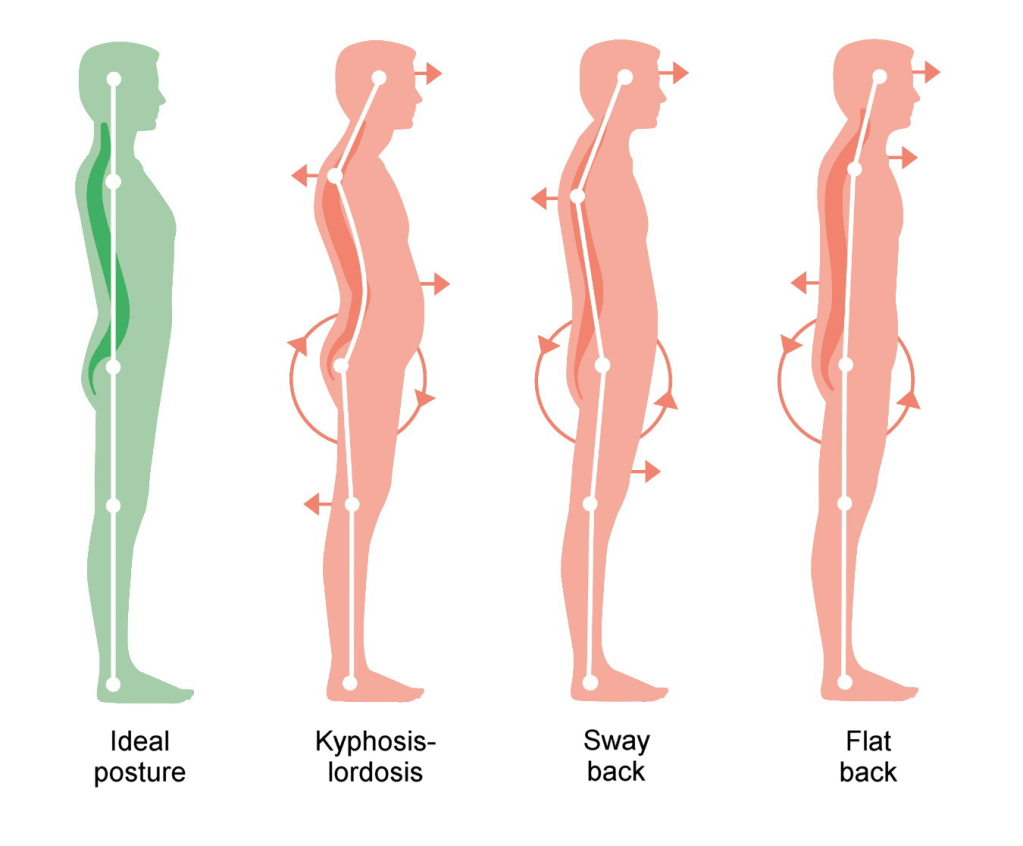
People compensate for the displaced weight of their head in three typical ways. Some arch their lower back, so that both the kyphotic and lordotic curves of their spine are exaggerated. Others shift their hips forward and come into sway back posture. Others contract their lower abdominals and round forward into flat back posture
The dangerous health effects of forward head posture
If we only come into forward head posture once in a while, it’s not a big deal. But when we’re in this posture every day, for multiple hours a day, our nervous system notices.
Our nervous system likes to be as efficient as possible, so when we repeat a posture over and over, it will begin to keep the muscles involved in that posture partially contracted all the time. This is the process of developing muscle memory; it saves us time and conscious brainpower, but it results in chronic muscle tension, reduced sensory-motor awareness, and a host of health problems.
Without conscious intervention, muscle tension and our resulting posture only get worse with time. Our proprioception adjusts so that we feel more and more comfortable in the unnatural posture.
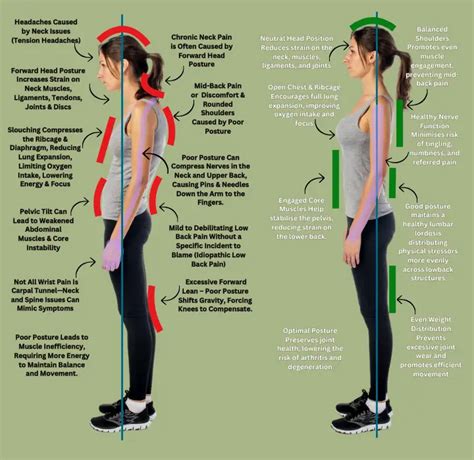
Tight neck muscles can be sore and painful, and they contribute to headaches and jaw disorders. Chronic muscle tension in the cervical spine also compresses the cervical vertebrae. This often leads to disc degeneration, bulging or herniated discs, osteoarthritis, Dowager’s Hump, and tingling or numbness in the arms and hands.
The contraction of the pectoralis muscles and upper rectus abdominis that typically occurs with forward head posture can lead to thoracic outlet syndrome, shallow breathing, and high blood pressure.
The contraction of the lower back muscles that inevitably occurs in order to keep us from falling forward leads to tightness and pain in the lower back, muscle spasms, lumbar disc problems, osteoarthritis, and sciatica.
How to Reverse a Somatic Reflex
Reflex patterns cannot be stretched away because the brain still holds the muscles in contraction. They are reversed through pandiculation, a three step neurological process: contract the reflexively held muscles, slowly release them and then completely relax. The slow release is where the sensory motor cortex relearns how to let go.
With consistent practice the brain updates its baseline. The Red Light, Green Light and Trauma patterns gradually soften, posture returns to neutral, breath deepens and the chronic pain that the reflexes were producing eases. The change is permanent because it happens in the nervous system rather than in the tissue.
Somatic Movements retrain the brain to release chronic muscle tension by increasing sensory input and teaching the nervous system to reset proper muscle function and regain body awareness.
Kerry personally found this to be extremely helpful in recovery from thoracic spinal fractures, so much so that she is in the process of becoming certified in teaching SME.
Somatics Movement Education key benefits are:
Pain and Tension relief; releasing chronic pain, stiffness and tight fascia
Improved Range of Motion and Flexibility; slow pandiculations free up connective tissue, joints and spine
Nervous System Regulation; lowers stress hormones like cortisol, calms anxiety, reduces the overactive stress response.
Trauma recovery; emotional and physical, accidents, injuries, falls, frights, abuse
Enhanced body awareness; gets you out of your head, connecting with feeling and sensing your body.
Better sleep and energy; it requires a lot of energy holding the body in dysfunctional stress patterns, releasing, relaxing and fully “letting-go” enables the brain and body to rest and sleep deeper.
Releasing Somatic Reflexes by learning how to voluntarily pandiculate has been shown to assist in the correction of many issues, some of which include:
Acute back pain
Chronic spinal pain
Sciatica
Scoliosis
General aches and pains
Persistent hip pain/ hip flexor tension
Joint pain
Loss of strength
Loss of balance/ coordination
TMJ (jaw pain/ clenching)
Repetitive strain injuries
Rotator Cuff / shoulder conditions
Anxiety
Breathing
Gut issues/ digestion
Post surgical recovery
Stroke recovery
Rehabilitation after Fracture/ sprain/strain injuries
Repetitive work patterns
Stress/ worry
Childhood trauma
Sudden loss/ grief
Poor concentration
Over thinkers
Poor sleep quality
If you are interested in learning and experiencing, Kerry is holding beginner classes. Book your spot via booking link, under group sessions
References:

